
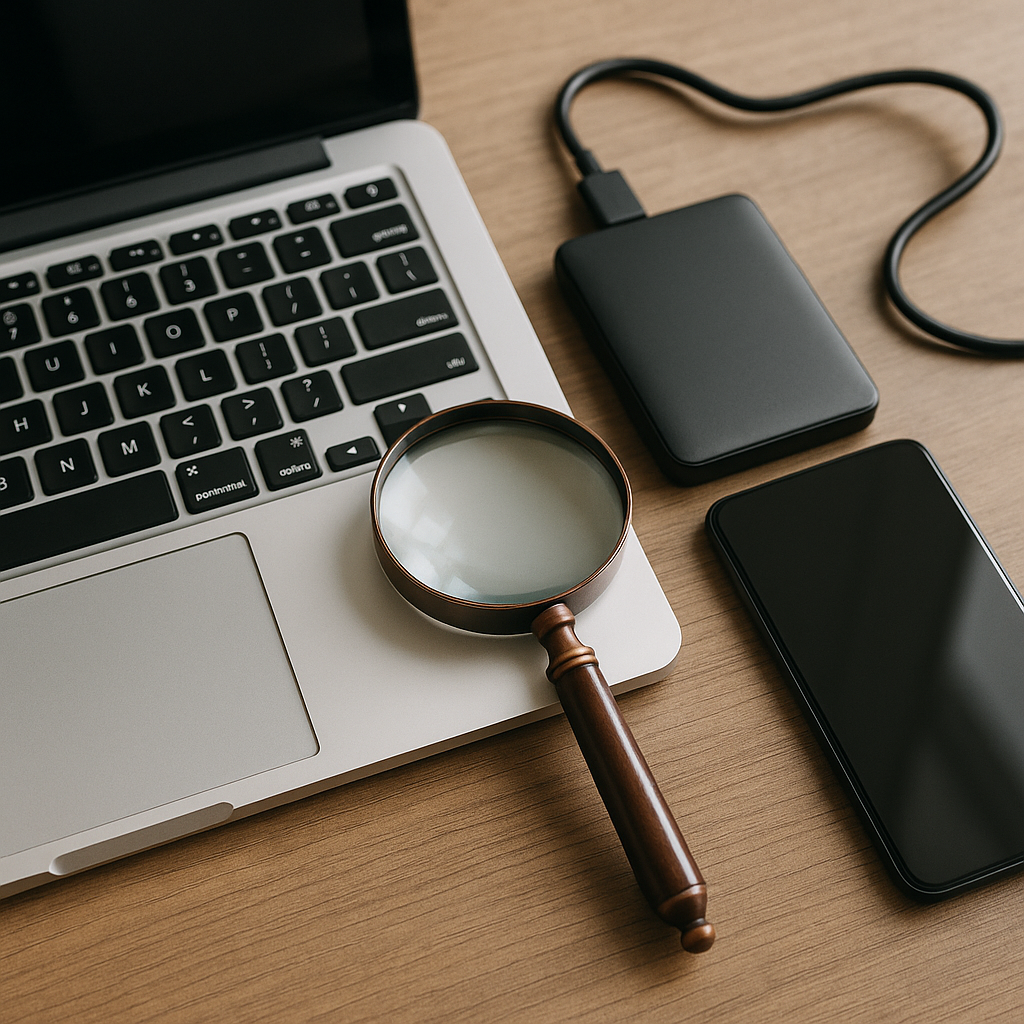
Digital Forensics Services Explained: Computer, Mobile, Cloud and Network Investigations
Digital evidence now plays a role in approximately 90% of criminal cases, yet most organizations have little understanding of what digital forensics services actually involve—or when they need them. A ransomware attack, a disgruntled employee copying trade secrets, a disputed contract in civil litigation: each of these scenarios demands far more than a standard IT response. They require specialized expertise capable of preserving electronic evidence in a way that holds up under legal scrutiny.
This guide breaks down the four core types of digital forensics investigations—computer, mobile, cloud, and network—explains the investigation process, and helps you understand when and why these services are critical to your organization’s legal, regulatory, and security posture.
What Are Digital Forensics Services?
Definition and Core Purpose
Digital forensics services are specialized investigations that collect, preserve, analyze, and report on electronic evidence from computers, mobile devices, cloud platforms, and networks. The defining characteristic that separates forensics from standard IT work is legal defensibility. Every step must be documented, every piece of evidence tracked, and every finding reproducible—because these results may ultimately appear in court, a regulatory hearing, or a civil lawsuit.
As INTERPOL’s digital forensics program highlights, electronic evidence is now a component of almost all criminal activities, making forensic support crucial for both law enforcement and private sector investigations. The discipline covers any device or platform that stores or transmits data, including networks, cloud services, and IoT systems—not just traditional computers.
Who Uses Digital Forensics Services?
Digital forensics originated in law enforcement but has expanded far beyond criminal investigations. Today, the following sectors rely on it regularly:
- Law enforcement and government agencies – Criminal investigations, cybercrime units, and national security operations
- Corporations and enterprises – Data breaches, insider threats, and intellectual property theft
- Legal firms and attorneys – Civil litigation, e-discovery, and criminal defense
- Insurance companies – Fraud investigations and claims validation
- Regulatory bodies – Compliance investigations and mandatory breach reporting
- Cybersecurity and DFIR providers – Incident response combined with forensic evidence preservation
The Four Main Types of Digital Forensics Investigations
1. Computer Forensics
Computer forensics focuses on desktops, laptops, servers, and workstations. Investigators create a bit-for-bit forensic image of storage media using write-blocking hardware, ensuring the original data is never modified during the examination. From that image, analysts can recover deleted files, examine browser history, reconstruct user activity timelines, and identify malware artifacts.
Common use cases include investigating employee misconduct, proving intellectual property theft, and supporting litigation by recovering communications or documents a user believed were permanently deleted. Computer forensics is often the starting point for broader investigations that later expand into cloud or network analysis.
2. Mobile Device Forensics
Smartphones and tablets have become primary communication and storage tools, making mobile forensics one of the fastest-growing areas of the discipline. Investigators extract call logs, text messages, encrypted app data (WhatsApp, Signal, Telegram), GPS location history, photographs, and application usage records—data that is frequently pivotal in both criminal and civil proceedings.
Mobile forensics presents unique technical challenges. Data can be encrypted, remotely wiped, or stored across multiple cloud syncing services. Skilled examiners use specialized extraction tools and methods—logical, file system, physical, and chip-off extraction—depending on the device model and available access credentials. The volatile nature of mobile data makes immediate evidence preservation especially critical.
3. Cloud Forensics
As organizations migrate to cloud-first environments, evidence increasingly lives in platforms like Microsoft 365, Google Workspace, AWS, and Salesforce rather than on local devices. Cloud forensics involves collecting and preserving evidence from these remote environments using provider APIs, audit logs, and legal process tools such as subpoenas or preservation requests.
The challenge with cloud forensics is jurisdiction, data custody, and provider cooperation. Logs may be stored across multiple geographic regions, retention windows are often short, and access may require coordinating with the cloud provider’s legal team. Experienced digital forensics services providers know how to act quickly—before logs expire—and how to maintain chain of custody for evidence that was never on a physical device you control.
4. Network Forensics
Network forensics examines traffic, logs, and activity across an organization’s infrastructure to reconstruct what happened during a security incident. Investigators analyze firewall logs, DNS queries, proxy records, IDS/IPS alerts, VPN access logs, and packet captures to trace an attacker’s movements from initial intrusion through lateral movement to data exfiltration.
This type of investigation is particularly valuable after ransomware attacks or advanced persistent threat (APT) intrusions, where understanding the attacker’s full path—and identifying every compromised system—is essential for containment and recovery. Network forensics answers not just “what was stolen?” but “how long were they in the environment, and where else did they go?”
The Digital Forensics Investigation Process
Phase 1: Identification
The investigation begins with identifying every potential source of electronic evidence. This includes computing devices, storage media, cloud accounts, network devices, authentication logs, mobile devices, and backup systems. Thoroughness here prevents critical evidence from being overlooked or inadvertently destroyed before it can be collected.
Phase 2: Preservation and Acquisition
Evidence is captured using forensically sound methods that prevent alteration. Forensic imaging creates verified copies of storage devices, while live capture collects volatile memory from systems that cannot be powered down without losing data. Cloud snapshots are taken via API before logs expire. Every action is recorded in a chain of custody log—a documented record proving who handled evidence, when, and for what purpose.
This documentation is not bureaucratic formality. Without a verified chain of custody, even the most damaging evidence can be challenged and excluded from legal proceedings.
Phase 3: Examination and Analysis
Forensic analysts use specialized tools—such as EnCase, FTK, Cellebrite, and open-source platforms—to extract and interpret evidence. Key analysis techniques include:
- Timeline reconstruction – Correlating file timestamps, system logs, and network activity into a unified sequence of events
- Deleted file recovery – Recovering files from unallocated disk space, recycle bins, and shadow copies
- Malware analysis – Identifying malicious code, persistence mechanisms, and command-and-control communications
- User activity analysis – Mapping logins, file access, application usage, and communication records
- Data carving – Extracting files based on headers and footers even when file system metadata is damaged
Phase 4: Documentation and Reporting
The investigation concludes with a detailed forensic report that documents findings, methodology, tools used, and conclusions. This report is written to be understood by non-technical audiences—judges, attorneys, executives, and regulators—while remaining technically rigorous enough to withstand expert scrutiny. In many cases, the forensic examiner may be called to provide expert witness testimony explaining their findings under cross-examination.
When Does Your Organization Need Digital Forensics Services?
The most common mistake organizations make is waiting too long to engage forensic expertise. By the time legal or compliance teams recognize the need, critical log data may have been overwritten, devices may have been reimaged, and evidence may have been lost forever. Consider engaging digital forensics services immediately when any of the following occur:
- A confirmed or suspected data breach or ransomware attack
- Evidence of insider threat activity—unusual data access, large file transfers, or departing employees with sensitive data
- An intellectual property dispute involving alleged theft of code, designs, or trade secrets
- Receipt of a litigation hold notice or discovery request requiring electronic evidence
- A regulatory inquiry from bodies such as the SEC, FTC, HIPAA enforcement, or state attorneys general
- Suspected employee fraud or policy violations that may require disciplinary action or termination
- An insurance claim related to a cyber incident requiring documented proof of loss
According to Champlain College’s overview of digital forensics, the discipline has expanded well beyond law enforcement into corporate, legal, and regulatory environments precisely because the volume and variety of electronic evidence continues to grow with every new technology platform organizations adopt.
Key Qualities to Look for in a Digital Forensics Services Provider
Not all forensic vendors are equal. When evaluating providers, prioritize the following:
- Certified examiners – Look for credentials such as Certified Forensic Computer Examiner (CFCE), EnCE, or GCFE
- Legal experience – Providers should have documented experience producing court-admissible reports and testifying as expert witnesses
- Cross-platform capability – Your provider should cover computer, mobile, cloud, and network forensics under one roof
- Rapid response availability – Forensic evidence degrades quickly; 24/7 response capability is often essential
- Clear chain of custody procedures – Ask about their evidence handling and documentation protocols before an incident occurs
Conclusion: Don’t Wait for a Crisis to Understand Digital Forensics
Digital forensics services are no longer a niche capability reserved for law enforcement and large enterprises. With digital evidence involved in the overwhelming majority of criminal cases and virtually every significant cyber incident, organizations of every size face the real possibility of needing forensic expertise. The difference between a well-managed investigation and a catastrophic legal or regulatory outcome often comes down to whether evidence was properly preserved in the first hours after an incident.
Understanding what digital forensics services cover—computer, mobile, cloud, and network investigations—and having a vetted provider relationship in place before you need it is one of the most practical risk management steps any organization can take. As INTERPOL’s guidance on digital forensics makes clear, the technical and legal complexity of electronic evidence continues to grow, and so does the cost of getting it wrong.
Action step: Review your incident response plan today. If it doesn’t include a named digital forensics partner and a documented evidence preservation protocol, close that gap before your next security incident forces the decision under pressure.